
Getting out of bed in the morning marks the beginning of a new day, but it can be an excruciating start for people with plantar fasciitis - one of the most common causes of heel pain in adults1.
Plantar fasciitis is a disorder of the connective tissue which supports the arch of the foot. It results in pain in the heel and bottom of the foot that is usually most severe with the first steps of the day or following a period of rest2.
Some people may also refer plantar fasciitis to jogger's heel or heel spur syndrome. About 50% of people with plantar fasciitis will also have a heel spur. Some physicians believe that heel spurs develop when the plantar fascia pulls away from the heel from overuse, poor support, weight gain, or flattening of the arches1.

Source: Design & Production: Kosi Gramatikoff (User: Kosigrim)
What Causes Plantar Fasciitis?
The cause of plantar fasciitis is not fully known, though it often presents from extended pressure put on the feet and heels, such as long periods of standing, an increase in exercise, or weight gain2.
As a naturopath and massage therapist, many of my clients most affected by plantar fasciitis work in jobs that involve a large amount of time on their feet; such as cafe staff, security guards, or athletes. The cause of the pain is inflammation of the plantar fascia, a band of tendon-like tissue that extends along the bottom of the foot from the heel bone to the ball of the foot, where it fans out to attach to the toe bones1.
Between 4% and 7% of the general population experiences heel pain at any given time: about 80% of these are due to plantar fasciitis2. It becomes more common with age as the plantar fascia loses its elasticity, making it more vulnerable to injury1.
Signs and Symptoms of Plantar Fasciitis
Plantar fasciitis typically presents as a sharp pain in the heel and symptoms often improve with continued walking3. If the plantar fascia is overused it can rupture.
Typical signs and symptoms of plantar fascia rupture include a clicking or snapping sound, significant local swelling and acute pain in the bottom of the foot3.
7 Ways to Relieve Symptoms of Plantar Fasciitis
Three of the key symptoms of mild plantar fasciitis are inflammation, swelling, and pain and most early-stage cases can improve with home-based treatments, usually within weeks. Although it may take several months for more severe cases.
Here are some simple natural treatments you may like to try to help relieve plantar fasciitis symptoms:
1. Move Your Body
It may feel counterintuitive to exercise when experiencing pain from plantar fasciitis, but inactivity can cause the plantar fascia to stiffen and then become painful again when you start to move around1.
Avoid activities that put excessive strain on the heel, such as jumping or running, for at least two weeks if you can, but keep the body moving to increase blood flow and relieve tightness in the fascia.
Replace higher intensity exercise like running, aerobics, and jumping, with low-impact exercises such as swimming and cycling to take the pressure off the feet.

2. Stretching and Strengthening
There is evidence that a gentle plantar fascia-stretching exercise can restore flexibility and reduce pain. In a study of 66 patients with chronic plantar fasciitis, researchers at the University of Rochester found that two years after learning the exercise, 92% of participants diagnosed with plantar fasciitis reported total or near-total satisfaction with their recovery, and 94% reported decreased pain1.
Exercise Recommendation: Stretching the Plantar Fascia
Sit on a chair and rest your ankle on the opposite knee, creating a triangle between your legs. Grasp the toes of the affected foot at the point where they meet the ball of the foot and pull back gently, in the direction of the shin, until you feel a stretch in the plantar fascia (you should feel tension when you press lightly on the arch of the foot).
Hold the stretch for 10 seconds and repeat 10 times per set, three times per day, on the affected foot.
More recent evidence backs this up. A 2023 systematic review of 20 studies found that more than 90% of patients saw successful outcomes with Achilles tendon, plantar fascia, and foam-roller stretching, and that Achilles tendon stretching specifically produced roughly double the rate of meaningful symptom relief compared with calf stretching alone7. If you only have time for one stretch, this research suggests the Achilles tendon stretch above the ankle is the one to prioritise.
3. Toe Curls
Toe curls may also help to relieve plantar fasciitis symptoms. Lay a towel on the floor and stand on it. Grasp the towel by curling your toes. Then straighten your toes and release the towel. Repeat for 1-2 minutes, twice daily.
4. Calf and Foot Massage
Massage will not cure plantar fasciitis but can help to loosen the muscles, ligaments and fascia that have become painfully tight and provide relief.
Tight calves can put a strain on the plantar fascia4, especially for people with a leaning-forward “ski jumper” postural pattern or those who wear high heels regularly5.
If possible, visit a remedial massage therapist for some deep tissue massage.
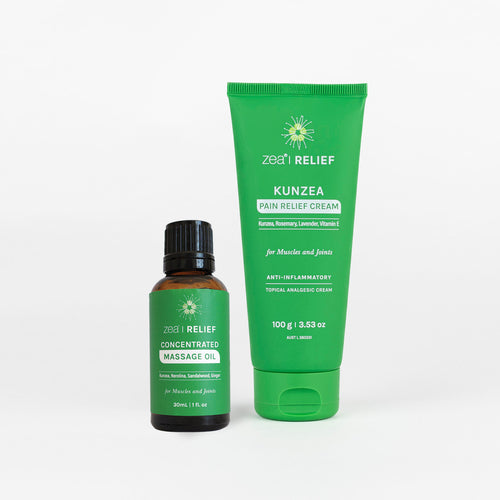
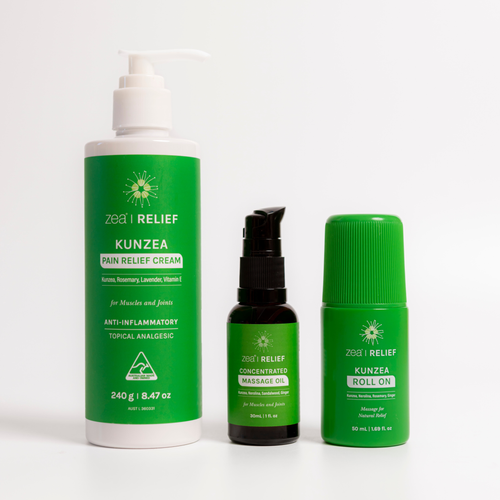
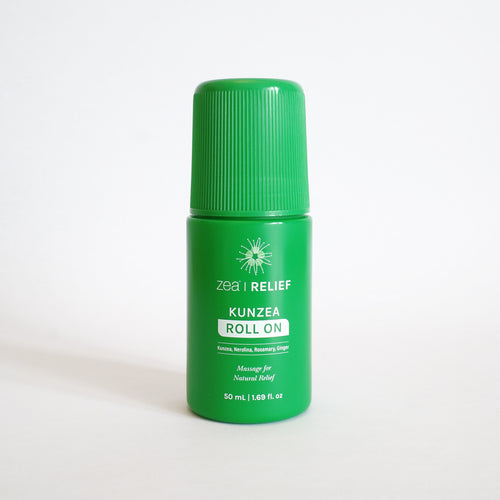
Alternatively, you can massage the calves and feet yourself, or use a small ball (such as a tennis or golf ball) and roll along the fascia, applying pressure as you can handle it. Do this twice daily for approximately 2 minutes and then massage Zea Relief Kunzea Products into the feet and calves - my recommendation would be either the Original Kunzea Cream or Concentrated Massage Oil.

5. Natural Anti-Inflammatory Agents
Topical natural anti-inflammatory products, such as Kunzea Cream, may be an effective way to calm redness, swelling and pain from plantar fasciitis, particularly if symptoms have been present for less than 6-8 weeks.
Having used Kunzea Cream on clients with plantar fasciitis for 10+ years, anecdotal evidence suggests that it may help heel pain and plantar fasciitis. While it may be useful for you, it’s important to understand that it won’t be a miracle cure, instead, it may temporarily reduce the symptoms.
Kunzea's anti-inflammatory effect comes from active compounds like alpha-pinene, 1,8-cineole and viridiflorol - see our full guide to what makes Kunzea oil effective for pain relief for the detail.
Alternating heat and cold is another tool worth having in your kit for plantar fasciitis flare-ups - our guide to using heat, cold and topical relief for muscle and joint pain covers when to use each. If plantar fasciitis is one symptom among several ongoing pain issues, Top Wellness Techniques for Addressing Chronic Pain looks at the bigger picture.
The underlying cause of plantar fasciitis and heel pain must still be addressed for true healing to take place.
6. Change Shoes
Choose supportive shoes with a low to moderate heel, good arch support, and cushioning.
High heels tighten the calf muscles, which exacerbates any inflammation, however, wearing a small heel takes pressure off the heel, which will help reduce inflammation and provide support in healing plantar fasciitis.
Where possible, avoid going barefoot to reduce your full body weight bearing down on your feet and putting pressure on the plantar fascia. Pressure leads to further inflammation and may exacerbate the condition.
7. Foot Soak
Another option to relieve the pain and tightness caused by plantar fasciitis is to soak feet for 15 to 20 minutes in warm water. Add a handful of Kunzea Bath Salts to aid in the healing process.
When finished, dry your feet and then massage Kunzea Muscle Balm or Concentrated Massage Oil into the painful area, focusing on the heel. Repeat this regime 2-3 times weekly, until symptoms improve.

Take a Load Off Your Feet
Plantar fasciitis affects many people worldwide and can be very difficult to treat effectively, particularly if your job involves long periods of standing.
Where possible, try to rest with the pressure off your heels outside of work. Incorporate exercises to help keep the fascia supple, such as stretches or swimming, and set a routine for home treatments, such as foot baths, calf stretches and massage with an anti-inflammatory product such as Kunzea Cream.
Take care of your feet, and take a load off whenever you can!
References
- Harvard Health Publishing. Easing The Pain Of Plantar Fasciitis. https://www.health.harvard.edu/newsletter_article/Easing_the_pain_of_plantar_fasciitis. Accessed June 1, 2020.
- Beeson, P. Plantar fasciopathy: Revisiting The Risk Factors. https://doi.org/10.1016/j.fas.2014.03.003. Accessed June 1, 2020.
- Jeswani T, Morlese J, McNally EG. Getting to the Heel of the Problem: Plantar Fascia Lesions. Clinical radiology 64 (9) 931-9. Accessed June 1, 2020.
- Cheung JT, Zhang M, An KN. Effect of Achilles Tendon Loading on Plantar Fascia Tension in the Standing Foot. https://pubmed.ncbi.nlm.nih.gov/16288943/ Accessed July 12, 2020.
- Csapo, R Maganaris CN, Seymour OR, Narici MV. Journal of Experimental Biology. On Muscle, Tendon and High Heels. https://jeb.biologists.org/content/213/15/2582. Accessed July 12, 2020.
- Rosenbaum AJ, DiPreta JA, Misener D. Plantar heel pain The Medical Clinics of North America. PP 339-52.
- Boob MA, Phansopkar P, Somaiya KJ. Physiotherapeutic Interventions for Individuals Suffering From Plantar Fasciitis: A Systematic Review. Cureus. 2023 Jul 31;15(7):e42740. https://pmc.ncbi.nlm.nih.gov/articles/PMC10467524/. Accessed August 2026.



![Kunzea Pain Relief Cream [Value Pack]](http://www.zeaaustralia.jp/cdn/shop/files/Neutral_Images_Website_1080_x_1080_12_aeeb7fb5-6b18-4315-99ea-c7a97403e37a.png?v=1776732033&width=500)


