Wash your face with a plain cleanser. Don't put anything else on it. Wait 60 minutes, doing nothing to your skin, then look and feel for the signs below. That is the whole test, and it will tell you more about your skin than any product label does.
Most men never get past guessing. You buy whatever's in front of you at the supermarket, it works fine for a few months, then your skin changes with the seasons or your razor irritates it and you're back to guessing. Knowing your actual skin type - not what you assume it is - is the difference between a routine that fights your skin and one that works with it.
The 60-minute bare-skin test
This is the method dermatologists actually use to sort skin into a type, adapted for a face that hasn't had anything applied to it in an hour1. It costs nothing and takes a lunch break.
- Wash with a plain, gentle cleanser. Nothing exfoliating, nothing medicated. Pat dry, don't rub.
- Apply nothing else. No moisturiser, no aftershave, no sunscreen. This is the part most men skip, and it's the part that matters - any product on your skin masks the result.
- Wait 60 minutes. Do something else. Don't touch your face.
- Check three things: how your skin looks in a mirror under decent light, how it feels when you make an expression (smile, frown), and whether a tissue pressed lightly on your forehead, nose and cheeks picks up any oil.
Run it twice, a few days apart, if the first result is unclear. Skin can behave differently depending on how recently you shaved, how much sleep you got, or the weather that day - which is exactly why the test isolates a plain, product-free baseline.
What your result means: the five skin types
Dermatologists group skin into five broad types1. Find your test result below and see what it means and what it doesn't.
| Type | Feels like | Looks like | Do | Avoid |
|---|---|---|---|---|
| Normal | Comfortable, no tightness, no shine building up | Even tone, small pores, no visible flaking or oil | A light daily moisturiser to maintain the balance you already have | Over-treating skin that isn't showing a problem |
| Oily | Shine returns within an hour or two of washing | Visible shine on the forehead, nose and chin (the T-zone), tissue picks up oil, pores look larger | A gel-based, non-greasy moisturiser; wash twice a day, no more | Skipping moisturiser altogether - stripped skin often overproduces oil to compensate |
| Dry | Tight, especially when you smile or frown; can feel rough | Flaking or dull patches, fine lines more visible, no shine anywhere | A richer, occlusive moisturiser applied while skin is still slightly damp | Hot water, long showers and alcohol-heavy aftershaves - all strip what little oil you have |
| Combination | Tight on the cheeks, shiny down the centre of the face | Oily T-zone (forehead, nose, chin), normal-to-dry cheeks | A lighter moisturiser overall, applied a little heavier on the cheeks if needed | Treating the whole face as one type - it rarely responds evenly to a single fix |
| Sensitive | Stings, itches or burns after washing, shaving or trying a new product | Redness or blotchiness that appears quickly and settles slowly2 | Fragrance-free products, patch-test anything new on your jaw for two days first | Exfoliants, strong actives and high-fragrance aftershaves until you know what triggers it |
A sensitive result on this test describes how your skin currently reacts, not a diagnosis. If your skin is persistently red, itchy or inflamed rather than reacting to something specific, that is worth raising with a doctor or dermatologist rather than working around with product choices alone.

Why one skin type isn't like another - and why guessing costs you
Skin type comes down to how much oil (sebum) your glands produce and how well your skin holds onto water. Oily skin makes more sebum than it needs. Dry skin doesn't hold moisture well, and can look dull or flake as the barrier dries out4. Combination skin does both in different zones, usually because the T-zone carries more oil glands than the cheeks. Sensitive skin reacts faster and more visibly to irritants, whether that's a fragrance, a razor or the wind.
None of this is fixed for life. It's a baseline that shifts with age, season, hormones and how you treat your skin day to day - which is why a test you can repeat matters more than a label you picked once and never revisited.
Why men's skin is often a different starting point
It's a common claim that men's skin is simply "thicker" or "oilier" than women's, full stop. The real picture is more specific. A 2018 literature review in the International Journal of Women's Dermatology, covering dozens of studies on physiological skin differences between sexes, found that men's skin does tend to run thicker with more collagen, and that facial sebum output is generally higher in men than women3.
But for most men, none of that is the thing actually changing their skin week to week. Shaving is. Dragging a blade across your face several times a week strips the outer layer of skin, can irritate follicles, and temporarily disrupts the same barrier that keeps oily skin balanced and dry skin comfortable. That's why a man with objectively oilier baseline skin can still test as sensitive or dry straight after a shave - the test result reflects what's happening right now, not just your biology.
Practically, this means two things. First, run the 60-minute test on a day you haven't shaved, to get your actual baseline rather than a post-shave reaction. Second, whatever your baseline type, a shave-day routine that avoids stripping the skin further (a gentle wash, no aggressive exfoliation, a moisturiser with some slip) will do more for day-to-day comfort than chasing a "men's skin" product built around a thickness myth.
Skin type versus skin state - the difference that matters
Skin type is your relatively stable baseline: normal, oily, dry, combination or sensitive, the kind the 60-minute test measures. Skin state is a temporary condition layered on top: sunburnt, windburnt, dehydrated after a big night, freshly irritated from shaving, breaking out from a new gym helmet or mask. A state passes in days. A type is closer to a season-to-season baseline.
The confusion causes real problems. A man with normal skin who spends a week in an air-conditioned office and a dry plane cabin might test as dry that week and conclude, wrongly, that his skin type has changed. It hasn't - his skin is in a temporarily dehydrated state. The fix is a richer moisturiser for a week or two, not a permanent switch in routine. Re-run the test after a normal week to check whether it holds.
How skin type changes with age and season
Skin type isn't fixed for life, and it isn't fixed across the year either.
- Teens to twenties: androgen-driven oil production is typically at its highest, which is why oily and combination skin are most common in this age group.
- Thirties to forties: oil production gradually eases for most men; skin that was reliably oily can shift toward combination.
- Fifties and beyond: sebum output continues to decline, and dry or easily irritated skin becomes more common, alongside slower barrier repair.
- Summer: heat and humidity push most skin types toward oilier, especially the T-zone.
- Winter: low humidity and hot showers push most skin types toward drier, and can turn a normally comfortable skin type temporarily sensitive.
This is the practical reason to re-run the 60-minute test every few months rather than assuming a result from five years ago still holds - and why a two-product routine that flexes (a lighter layer in summer, a richer one in winter) usually beats a single fixed product used year-round.

Building a routine around your result
Once you know your type, the routine gets simple. Two products, twice a day, matched to what the test told you.
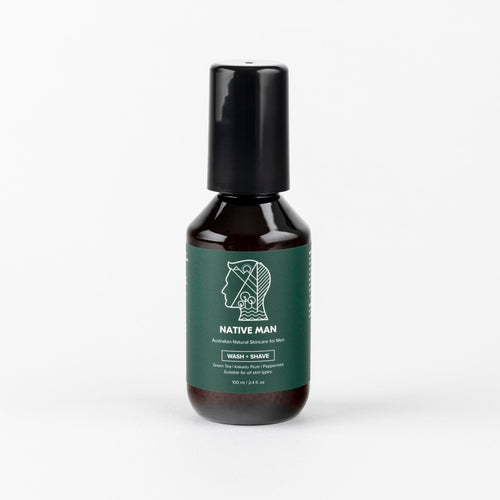
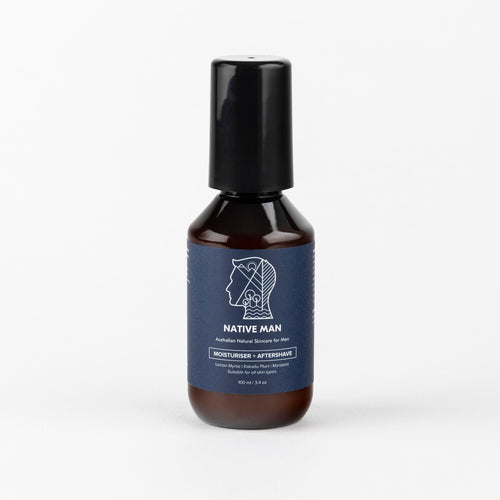
Normal skin: a gentle cleanser like Zea's 2 in 1 Wash + Shave in the shower, followed by a light daily moisturiser such as 2 in 1 Moisturiser + Aftershave. There isn't much to fix, so the job is maintenance, not correction.
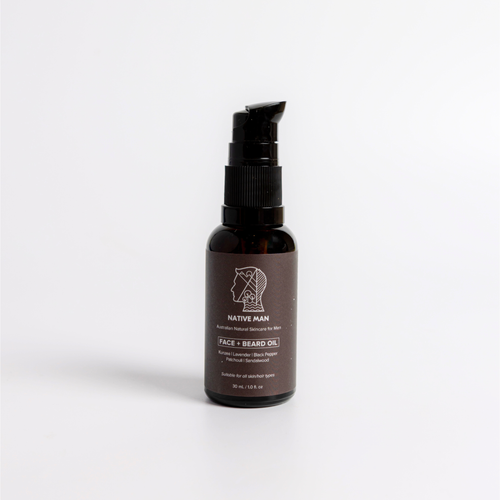
Oily and combination skin: stick with a gentle, non-stripping wash and a lighter-feeling moisturiser rather than skipping moisturiser altogether. A beard and face oil like Native Man Face + Beard Oil, used sparingly on the beard rather than the whole face, can condition without adding shine to already-oily skin.
Dry skin: a richer moisturiser matters more here than the cleanser. Zea's 2 in 1 Moisturiser + Aftershave is built with this skin type and post-shave comfort in mind, formulated to sit on normal-to-dry skin without the sting some alcohol-based aftershaves cause. It is not marketed as a fix for every skin type - if your test result came back oily, a lighter product will usually serve you better.
Sensitive skin: the priority is removing triggers before adding anything new. Fragrance-light, gentle formulas and a slower rate of change (one new product at a time, patch-tested) matter more than any specific ingredient claim. Rebuild from the simplest possible two-step routine and add back slowly.
For a broader reset across cleansing, shaving and grooming, the Native Man Face Trio and The Ultimate Mens Skincare Bundle bundle the core steps together, and the 2 in 1 Citrus Hair + Body Shampoo covers the rest of a shower routine without adding fragrance load to a face that's already reacting to something. The full Native Man Skincare range is worth a look once you know what you're shopping for.
Frequently asked questions
How often should I re-test my skin type?
Every three to four months is a reasonable rhythm, and always after a big seasonal shift (moving from summer into winter, for example) or a change in routine you can't explain.
Can my skin type change permanently?
Yes, gradually. Oil production naturally declines with age for most men, so skin that was reliably oily in your twenties commonly shifts toward combination or normal by your forties, and drier again later on.
I shaved this morning and my skin feels tight and sensitive. Does that mean my skin type is sensitive?
Not necessarily. Run the test on a non-shave day for your real baseline. What you're feeling straight after shaving is more likely a temporary state, not your underlying type.
Is oily skin bad for you?
No. Oily skin isn't a problem to eliminate, it's a baseline to work with. The oil (sebum) your glands produce is part of what keeps skin's barrier intact; the goal is managing shine and pore appearance with the right products, not stripping oil away completely.
Do I need different products for my neck and beard than my face?
Usually not two full routines, but the neck and beard area can behave differently to the rest of the face, particularly if you shave it more often. If you notice ongoing irritation specifically along the jaw and neck, that's worth testing separately.
What if my skin doesn't clearly fit one type?
That's common, and it's exactly what the combination category covers - an oily T-zone with normal-to-dry cheeks. If your result still feels mixed after two tests, treat the areas differently rather than forcing a single label.
References
Sources open in a new tab so you do not lose your place.
- 1. American Academy of Dermatology. Skin care tips dermatologists use. Last updated 29 Oct 2024. View source
- 2. Dyall-Smith D. Sensitive skin. DermNet NZ, 2009. View source
- 3. Rahrovan S, Fanian F, Mehryan P, Humbert P, Firooz A. Male versus female skin: what dermatologists and cosmeticians should know. International Journal of Women's Dermatology. 2018 Sep;4(3):122-130. View source
- 4. Oakley A. Dry skin (xeroderma). DermNet NZ, 1997, updated March 2022. View source
Author: Hayden Brass