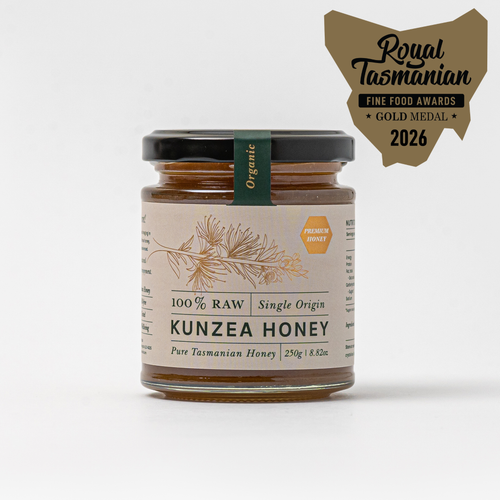
Manuka honey is a unique variety of honey produced from the nectar of the Manuka tree (Leptospermum scoparium), native to Australia and New Zealand. While all honey contains natural antibacterial properties, Manuka honey stands apart due to its high levels of naturally occurring bioactive compounds - most notably methylglyoxal (MGO).
Unlike standard honey, which relies primarily on hydrogen peroxide for its antibacterial activity, Manuka honey retains its activity even when exposed to heat, light, or dilution. This stability has made it one of the most researched honeys in the world, with growing interest in its role in immune support, digestive health, and everyday wellbeing.
Because of its unique composition, Manuka honey is often included in wellness routines not just as a natural sweetener, but as a functional food. Zea’s high-quality Manuka honey allows you to enjoy these benefits daily, whether drizzled over breakfast, stirred into tea, or taken on its own.
Below, we explore six evidence-based health benefits of eating Manuka honey, and how it may support the body when enjoyed as part of a balanced diet.
1. Supports Immune Health
Manuka honey is widely recognised for its role in supporting immune function, particularly during times of increased immune stress and is known as an immune booster. What sets Manuka honey apart from regular honey is its naturally high concentration of MGO, a compound responsible for its potent antibacterial, antiviral, and anti-inflammatory properties.
These properties may help the body defend against harmful microorganisms while supporting the immune system’s natural response to infection. Manuka honey also contains a range of antioxidants, which help neutralise free radicals and support the body’s ability to respond to illness more effectively.
When consumed as part of a balanced diet, Manuka honey may provide gentle, natural immune support, particularly during seasonal changes, periods of fatigue, or when the body is under physical stress.
2. May Help Ease a Sore Throat
Manuka honey has long been used as a natural remedy for soothing sore or scratchy throats. Its thick, coating texture helps calm irritation, while its antibacterial and anti-inflammatory properties may help address some of the underlying causes of throat discomfort.
Research suggests that Manuka honey can reduce levels of Streptococcus mutans, which is the exact type of bacteria that causes sore throats. This antibacterial activity, driven largely by its MGO content, may help reduce microbial load while supporting healing.
For gentle relief, Manuka honey can be taken by the spoonful or mixed into a warm (not hot) glass of water or herbal tea. This simple approach may help reduce inflammation, ease discomfort, and provide comforting support during colds or seasonal illness.
3. May Promote Oral Health
Although honey is naturally sweet, Manuka honey has been studied for its potential role in supporting oral health. Research indicates that it may help reduce levels of harmful oral bacteria associated with plaque buildup, gingivitis, and gum inflammation.
Certain studies suggest that Manuka honey may inhibit bacteria such as Streptococcus mutans, which is linked to tooth decay. This makes it unique among sweet foods, as it may help support a healthier oral environment rather than disrupt it.
Manuka honey should still be consumed mindfully and alongside regular brushing and flossing, but its antibacterial profile may offer supportive benefits when included as part of an overall oral care routine.

4. Natural Antibacterial Properties
One of the most distinctive features of Manuka honey is its non-peroxide antibacterial activity, largely attributed to MGO. Scientific research has demonstrated that Manuka honey can inhibit the growth of a wide range of bacteria, including strains that may be resistant to conventional antibiotics.
This antibacterial activity is what has driven interest in Manuka honey for both internal and external applications. When consumed, it may help support internal balance by limiting the growth of undesirable bacteria within the body.
The antibacterial strength of Manuka honey depends on its MGO or UMF rating - the higher the MGO, the stronger the antibacterial activity. This is why certified Manuka honey is often preferred for wellness and therapeutic use.
5. May Support Stomach Ulcer Management
Manuka honey has been studied for its potential role in supporting stomach health, particularly in relation to Helicobacter pylori - a bacterium commonly associated with gastric irritation and stomach ulcers.
Research suggests that Manuka honey may help inhibit the growth of H. pylori, which may contribute to improved stomach comfort when used as part of a broader dietary and medical approach. While it is not a treatment, its antibacterial properties may provide gentle, complementary support for individuals managing digestive discomfort.
Including Manuka honey as part of a balanced diet may help support the stomach’s natural environment and overall digestive resilience.
6. Supports Digestive Health
Beyond its antibacterial effects, Manuka honey may also support digestive health by helping maintain a balanced gut microbiome. Its antibacterial properties may help limit the overgrowth of harmful bacteria, while naturally occurring sugars and compounds may support beneficial gut bacteria.
Research suggests that Manuka honey may encourage the growth of probiotics such as Bifidobacterium and Lactobacillus, which are essential for maintaining a healthy digestive system. A balanced microbiome may help alleviate common gut issues, including bloating, gastritis, and discomfort associated with conditions like IBS, ulcerative colitis, and Crohn’s disease. Additionally, medical-grade Manuka honey has been shown to inhibit harmful bacteria such as E. coli, Salmonella, and C. difficile, supporting overall gut balance.
Consumed in small amounts, Manuka honey may help promote digestive balance without placing unnecessary strain on the gut.
How to Enjoy Manuka Honey
-
Take 1-2 teaspoons daily, either on its own or with food
-
Add to warm (not boiling) water, tea, or milk
-
Drizzle over yoghurt, porridge, or toast
-
Choose certified Manuka honey with a UMF or MGO rating
Conclusion
Manuka honey is a truly distinctive natural food, valued for its stability, antibacterial activity, and antioxidant profile. Backed by a growing body of research, it offers gentle support for immune health, digestion, oral health, and overall wellbeing.
When enjoyed regularly and mindfully, Manuka honey can be a nourishing addition to everyday routines - combining tradition, science, and nature in one simple ingredient.
Shop Zea’s Manuka honey to ensure you get all the natural benefits in every spoonful.
References
-
Berkheiser, K., & Northrop, A. (2023, November 13). 6 health benefits of manuka honey, based on science. Healthline. https://www.healthline.com/nutrition/manuka-honey-uses-benefits
-
Cleveland Clinic. (2022, March 14). 5 benefits of Manuka honey. Cleveland Clinic Health Library. https://health.clevelandclinic.org/manuka-honey-benefits
-
Luzardo, H. (2025). Benefits of manuka honey. WebMD. https://www.webmd.com/a-to-z-guides/manuka-honey-medicinal-uses
-
Fennell, A. Manuka honey facts or fiction: 15 truths and myths uncovered. Biosata. https://biosota.com.au/blogs/resources/manuka-honey-facts-or-fiction-14-truths-and-myths-uncovered?srsltid=AfmBOopS5FClp8BkYNmW9WuyepII4sOkmMzQACrsdyF75y9uYIDTvmF9