Ever settle into bed after a long day, finally ready to switch off, only to have your legs decide otherwise? That crawling, tingling, "I have to move right now" feeling in your legs is more common than most people realise, and it has a name: restless leg syndrome, or RLS. If you've ever found yourself pacing the hallway at midnight just to get some relief, you're definitely not alone.
In this blog, we'll unpack what restless leg syndrome actually is, what might be behind it, and where magnesium fits into the picture. We'll also share some simple, everyday ways to help settle restless legs before bed, so you can get back to the sleep you deserve.
What Is Restless Leg Syndrome?
Restless leg syndrome is a neurological condition that causes an almost irresistible urge to move your legs, usually paired with an uncomfortable sensation described as aching, crawling, tingling, or "pins and needles" deep in the muscle. It typically strikes when you're sitting still or lying down, and it tends to get worse in the evening and at night, which is exactly when you're trying to wind down.
It's estimated that somewhere between 2% and 15% of adults experience RLS to some degree, and the risk tends to increase with age. The exact cause isn't always clear, but researchers believe it's linked to a few key factors:
-
Low iron levels in the brain: even when blood iron tests look normal
-
Genetics: RLS often runs in families
-
Pregnancy: hormonal changes can bring on temporary symptoms
-
Certain medications: and underlying health conditions, such as kidney disease or nerve issues
-
Lifestyle triggers: like caffeine, alcohol, stress, and long periods of sitting still
The good news is that for most people, RLS is manageable with the right combination of lifestyle tweaks, and for many, it's simply about finding what calms your body down before bed.
The Magnesium Connection
You've probably heard that magnesium is good for muscles, and there's a reasonable explanation for why it keeps coming up in conversations about restless legs. Magnesium plays an essential role in how your muscles and nerves communicate, helping muscles relax after they contract. Because of this, magnesium is one of the most commonly recommended natural approaches people try for RLS.
There is promising research supporting this idea. A recent open-label pilot study found that participants who took magnesium citrate daily for eight weeks experienced a meaningful reduction in RLS symptoms and improved quality of life. Other studies have found a link between lower magnesium levels and RLS severity, suggesting that topping up magnesium may be particularly worthwhile for those who are naturally a little low. Research in this space is ongoing, and magnesium tends to work best as one part of a broader wind-down routine, alongside the everyday habits below.

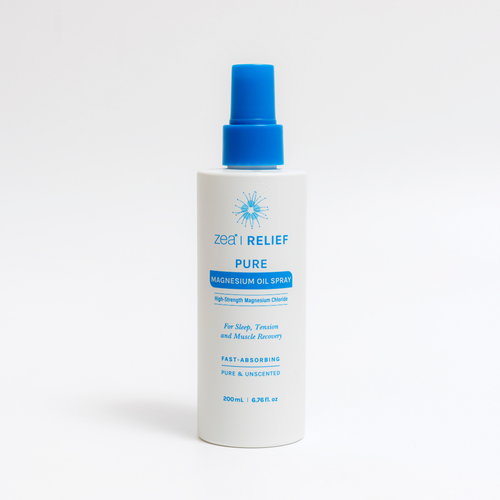
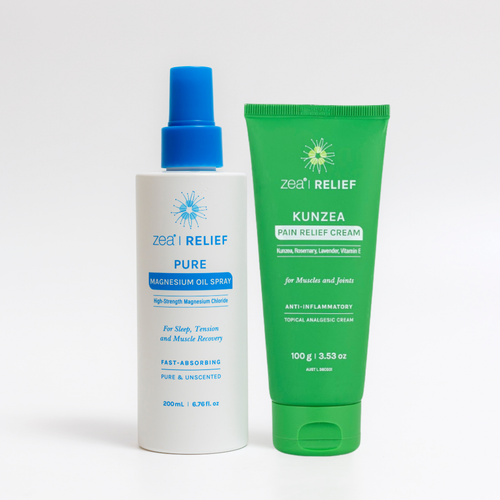
For an easy way to try topical magnesium, our Magnesium Oil Topical Spray is a simple two-ingredient formula (just water and magnesium chloride) that can be sprayed directly onto tired, tense legs before bed. Many people find spraying it on 30-60 minutes before sleep and gently rubbing it in becomes a natural part of settling down for the night.
Other Things That May Help
Beyond magnesium, there are several everyday habits that may help take the edge off restless legs, particularly when practiced consistently:
-
Get moving during the day: Gentle daily exercise, like walking or stretching, may help reduce symptoms, just try to avoid intense workouts too close to bedtime, as they can be overstimulating.
-
Check your iron levels: Since low iron is one of the most well-established contributors to RLS, it's worth mentioning to your doctor if symptoms persist.
-
Cut back on evening caffeine and alcohol: Both are known to trigger or worsen RLS symptoms, especially later in the day.
-
Stay hydrated: Dehydration can contribute to muscle cramping and general leg discomfort.
-
Stretch before bed: A few minutes of gentle leg stretches can help ease tension that's built up over the day.
If your legs feel more overworked than unsettled (after a long shift on your feet, for example), our MAGZEA™ Muscle Recovery Salts are a magnesium-forward option with cooling peppermint and lemon ironbark, built to help ease tired, tense muscles.

Building a Calming Leg Routine Before Bed
One of the most useful things you can do for restless legs isn't a single product or trick, it's building a consistent, calming routine your body learns to recognise as "time to settle." A predictable wind-down signals to your nervous system that the day is done, which can make it easier for both your mind and your legs to relax.
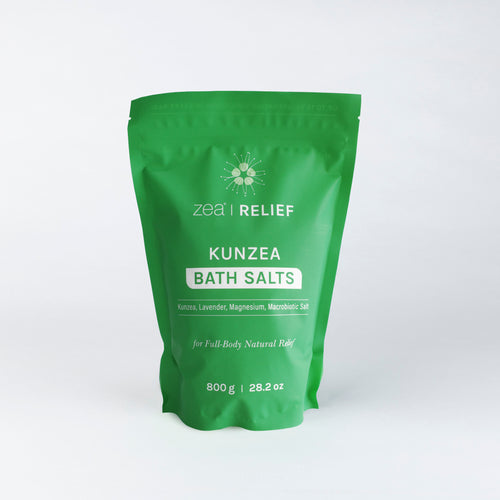
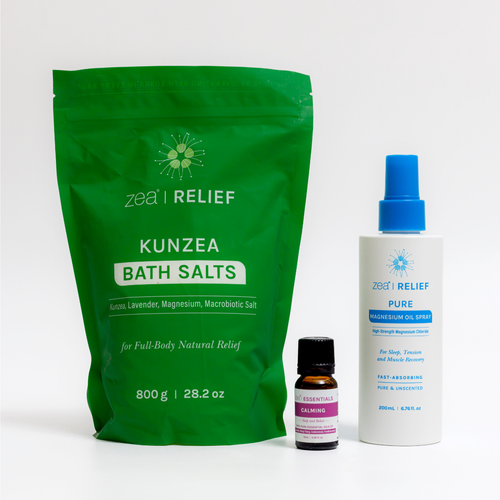
A simple routine might look like this: start with a warm bath using our Kunzea Bath Salts, which combine Epsom magnesium salt with Kunzea, lavender, and ylang ylang to help soothe tired muscles as you ease into wind-down mode. Once you're out and dry, a light spray of our MAGZEA™ Muscle Recovery Spray on your legs can help ease any lingering tightness, with cooling peppermint and spearmint offering a nice contrast after a warm soak. Then, just before you get into bed, roll our Sleep Support Roll On onto your ankles, calves, or the backs of your knees, the Kunzea, magnesium, and lavender blend is designed to calm the mind and support relaxation of tired or tense muscles, giving your body one final cue that it's time to switch off.
Whatever combination you land on, consistency tends to matter more than any single step. Giving your body the same cues each night, at roughly the same time, can make a real difference over a few weeks.
When to See a Doctor
For many people, restless leg syndrome is a mild, manageable annoyance that responds well to lifestyle changes. But it's worth chatting to your doctor if:
-
Symptoms are frequent (more than twice a week) or significantly disrupting your sleep
-
You suspect low iron, particularly if you're also feeling fatigued or unusually pale
-
You're pregnant and experiencing new or worsening symptoms
-
Symptoms started or worsened after beginning a new medication
-
Nothing you've tried seems to help, and it's affecting your day-to-day life
A simple blood test can check your iron and ferritin levels, and your doctor can help rule out other contributing factors. There's no need to just put up with restless nights.
The Bottom Line
Restless leg syndrome can be frustrating, especially when it shows up right as you're trying to unwind. While magnesium isn't a guaranteed cure, for many people it's a simple, low-risk addition to a broader wind-down routine that includes gentle movement, good sleep habits, and a bit of patience. Whether that's a warm soak in the bath, a calming roll-on before bed, or simply a consistent evening routine, small, sustainable habits are often what make the biggest difference over time.
References
- González-Parejo, P., Martín-Núñez, J., Cabrera-Martos, I., & Valenza, M. C. (2024). Effects of dietary supplementation in patients with restless legs syndrome: A systematic review. Nutrients, 16(14), Article 2315. https://doi.org/10.3390/nu16142315
- Gorantla, S., Ravisankar, A., & Trotti, L. M. (2024). Magnesium citrate monotherapy improves restless legs syndrome symptoms and multiple suggested immobilization test scores in an open-label pilot study. Journal of Clinical Sleep Medicine, 20(8), 1357–1361. https://doi.org/10.5664/jcsm.11206
- Marshall, N. S., Serinel, Y., & Killick, R. (2019). Magnesium supplementation for the treatment of restless legs syndrome and periodic limb movement disorder: A systematic review. Sleep Medicine Reviews, 48, Article 101218. https://doi.org/10.1016/j.smrv.2019.101218
- Massey, T. H., & Robertson, N. P. (2020). Restless legs syndrome: Causes and consequences. Journal of Neurology, 267(6), 1848–1850. https://doi.org/10.1007/s00415-019-09682-6
- National Institute of Neurological Disorders and Stroke. (n.d.). Restless legs syndrome. U.S. Department of Health and Human Services. https://www.ninds.nih.gov/health-information/disorders/restless-legs-syndrome
- Sleep Health Foundation. (n.d.). Restless legs syndrome. https://www.sleephealthfoundation.org.au/sleep-disorders/restless-legs-syndrome