You do not need to play tennis to get tennis elbow. Most people who develop it are carpenters, hairdressers, nurses, gardeners, chefs, tradies and office workers who spend their day gripping, twisting and lifting. Fewer than one in ten cases actually come from racquet sports.
Tennis elbow is also one of the most misunderstood pain conditions in Australia, and the misunderstanding matters. The old advice of rest, ice and anti-inflammatories was built on a picture of the condition that research has since overturned. Following it can leave you sore for a year or more longer than you need to be.
This guide covers what tennis elbow actually is, how to tell it apart from other causes of elbow pain, how long recovery genuinely takes, the treatments with the strongest evidence behind them, and where topical relief like Kunzea Pain Relief Cream and MAGZEA Muscle Recovery Spray genuinely fit into the picture.
What Is Tennis Elbow?
Tennis elbow, known medically as lateral epicondylitis or lateral elbow tendinopathy, is pain and tenderness on the outside of the elbow caused by damage to the tendons that attach your forearm muscles to the bone. The tendon most often involved is the extensor carpi radialis brevis, or ECRB, which runs from the outside of your elbow down to your wrist and does the work every time you extend your wrist or grip something.
According to healthdirect Australia1, it affects roughly 2 in every 100 people aged between 30 and 65. Peak prevalence sits in the 45 to 54 age bracket, and the dominant arm is affected in around three quarters of cases.
Why "Tennis Elbow" Is a Misleading Name
Two parts of the name are wrong, and both matter for treatment.
The first is tennis. Occupational data shows the highest rates in manual and repetitive-grip jobs rather than in athletes. Studies of specific trades have found rates as high as 11% in some food-processing roles compared with around 1% in non-manual work.
The second, and more important, is the "itis". The suffix means inflammation, but when researchers examined the tissue itself they found something different. Work led by orthopaedic surgeon Robert Nirschl showed that chronic tennis elbow tendons contain disorganised collagen, immature blood vessels and an abundance of fibroblasts, but almost none of the inflammatory cells you would expect. The condition is better described as a tendinosis2: a failed healing response in the tendon, not an inflammatory flare.
This is the single most useful thing to understand about tennis elbow. A tendon that has failed to heal does not need to be calmed down and left alone. It needs to be gradually and progressively loaded so it can rebuild. That is why rest alone tends to disappoint, and why the treatments that work best are the ones that ask the tendon to do controlled work.
Symptoms: How to Tell If It Is Tennis Elbow
The classic presentation is fairly specific:
- Pain on the bony point on the outside of the elbow, which is often tender to press
- Pain that radiates down the back of the forearm towards the wrist
- Weak or painful grip. Shaking hands, turning a doorknob, lifting a kettle or a full coffee cup, and wringing out a cloth are the usual culprits
- Worse with wrist extension, meaning bending the hand back at the wrist against resistance
- Morning stiffness that eases with gentle movement, then returns after use
- Onset that is gradual over weeks more often than sudden
Two Simple Self-Checks
Neither of these replaces a proper assessment, but they help you work out what you are dealing with.
The resisted wrist lift. Rest your forearm on a table, palm down, hand over the edge. Have someone press down on the back of your hand while you try to lift it. Sharp pain at the outside of the elbow is a positive sign.
The chair lift. Try lifting a light chair with your palm facing down and your elbow straight. If that reproduces the pain but lifting with your palm facing up does not, the extensor tendons are the likely source.
What Else It Could Be
Elbow pain is not always tennis elbow, and getting the diagnosis wrong wastes months. Consider seeing a GP or physiotherapist if your symptoms look more like one of these:
- Golfer's elbow (medial epicondylitis). Same problem, opposite side. Pain on the inside of the elbow, worse with gripping and wrist flexion
- Radial tunnel syndrome. Pain sits slightly further down the forearm rather than on the bony point, often with an aching, burning quality
- Referred pain from the neck. Cervical spine problems can send pain into the forearm. Pins and needles, numbness or neck stiffness are clues
- Elbow arthritis or bursitis. More likely if you have visible swelling, warmth, or loss of the ability to straighten the elbow fully
See a doctor promptly if you have significant swelling, redness or heat around the joint, fever, numbness or a change in the colour or sensation of your hand, or if the pain followed a specific fall or impact.
How Long Does Tennis Elbow Last?
This is the question most people actually want answered, and the honest answer has two halves.
The good news is that tennis elbow is largely self-limiting. healthdirect reports that 9 in 10 people recover within a year even without treatment.1 The less welcome news is the timeframe. Full recovery typically takes 6 to 12 months, and the research literature puts the average episode duration at 6 to 24 months.
What treatment changes is not usually whether you recover, but how quickly, how much pain you carry along the way, and how likely it is to come back. That is a meaningful difference when the alternative is a year of not being able to lift a kettle.
What Actually Works: The Evidence

Australian researchers have produced some of the most important trials in this field, and the findings are consistent enough to give clear direction.
1. Progressive Loading Exercise (Strongest Evidence)
Exercise is the first-line treatment for lateral elbow tendinopathy, and it is the only intervention that addresses the underlying tendon problem rather than just the symptoms.
The landmark Australian trial by Bisset and colleagues, published in the BMJ in 20063, followed 198 people with tennis elbow for a year. At 52 weeks, 94% of the physiotherapy group had a successful outcome, compared with 90% of the wait-and-see group and only 68% of the corticosteroid injection group. Crucially, the physiotherapy group also got there faster and sought less additional treatment along the way.
A well-known 2010 trial of eccentric wrist extensor loading using a rubber resistance bar (the "Tyler twist") was stopped early because the benefit was so clear, with the eccentric group reporting an 81% improvement in pain against 22% in the standard treatment group.4
The general progression looks like this:
- Stage 1, isometric holds. Hold a static wrist extension against light resistance for 30 to 45 seconds, around 5 times, once or twice daily. These are usually the most tolerable starting point when pain is high
- Stage 2, slow eccentrics. Use the good hand to lift the weight, then lower it slowly, over 3 to 4 seconds, with the sore hand. Three sets of 10 to 15, every second day
- Stage 3, heavy slow resistance. Full up-and-down movement with heavier load and fewer reps, three times a week with at least 48 hours between sessions
- Stage 4, grip and function. Rebuild the specific movements that hurt, whether that is a hammer, a hairdryer, a mouse or a racquet
The pain rule. Discomfort of up to about 4 or 5 out of 10 during the exercise is acceptable, provided it settles within 24 hours and your elbow is not worse the next morning. If it is worse, reduce the load rather than stopping altogether.
Work with a physiotherapist if you can. Loading needs to be matched to your stage and adjusted as you improve, and the trials that produced these results used supervised programmes.
2. Relative Rest, Not Complete Rest
Stopping everything lets the tendon and forearm muscles weaken further and does not speed healing. The better approach is to keep moving while removing the specific aggravators: reduce your grip force, take breaks from repetitive tasks, use two hands where you would normally use one, and lift with your palm facing up rather than down.
Practical changes matter more than people expect. A thicker grip on tools and racquets, a lighter kettle, a vertical mouse, a lower keyboard and lighter shopping bags all reduce the load going through that tendon dozens of times a day.
3. A Counterforce Brace or Strap
A counterforce strap sits on the forearm just below the elbow and redistributes the pull away from the damaged part of the tendon. Evidence shows it can produce an immediate improvement in pain-free grip strength7, which makes it genuinely useful for getting through a work day. It is a symptom-management tool rather than a cure, so it works best worn during aggravating activity and combined with a loading programme.
4. Topical Anti-Inflammatories and Pain Relief
A Cochrane review of topical NSAIDs for lateral elbow pain found that 73 out of 100 people using an anti-inflammatory gel reported improvement compared with 49 out of 100 using a placebo gel, with benefit shown for up to about 4 weeks.5 Topical application also avoids the stomach and cardiovascular side effects that come with tablets, which matters if you are managing pain over months rather than days.
Heat and cold both have a role. Cold can take the edge off after a heavy day or a loading session. Warmth before exercise helps a stiff forearm move more comfortably. A dual-action pack that can be warmed in the microwave or chilled in the freezer covers both jobs, which saves buying two things. Our Premium Rectangle Heat Pack is filled with Australian-grown lupin rather than wheat, which retains temperature longer than a wheat pack and is completely odourless. Our guide on how to use heat, cold and topical relief covers the timing in more detail.
What the Evidence Does Not Support
This is where the picture has changed most, and it is worth being direct about it.
Corticosteroid injections. They work brilliantly in the short term and appear to make things worse in the long term. The Coombes trial published in JAMA in 20136 found that at one year, 83% of the corticosteroid group had completely recovered or much improved, compared with 96% of the placebo injection group. Recurrence at one year was 54% after corticosteroid against 12% after placebo. The Bisset trial found the same pattern, with 72% of the injection group deteriorating after the initial benefit wore off, against 8% in the physiotherapy group.
healthdirect now states plainly that there is evidence corticosteroid injections can be harmful in the longer term and that they are no longer recommended in most cases. They still have a place for people in severe pain who cannot begin rehabilitation without relief, but as a first move they are a poor trade.
Passive treatment alone. Ultrasound, massage and manual therapy can feel good and can help you tolerate loading, but on their own they do not resolve the tendon problem.
Waiting it out. It usually works eventually, but it is the slowest route and it leaves you carrying the pain for the full 6 to 24 months.
A Practical Weekly Routine
Here is how the pieces fit together in an ordinary week once you are past the most acute stage.
| When | What to do | Why |
|---|---|---|
| Morning | Gentle wrist extensor stretch, 30 seconds, 3 times. Apply topical relief before your first grip-heavy task | Reduces morning stiffness and prepares the forearm for load |
| During work | Counterforce strap for aggravating tasks. Micro-breaks every 20 to 30 minutes. Lighten your grip | Cuts cumulative load through the tendon |
| 3 days per week | Loading session: isometrics, eccentrics or heavy slow resistance depending on your stage | The part that actually rebuilds the tendon |
| After loading | Cooling spray or cold pack to the forearm and elbow, 10 minutes | Settles post-session soreness so you stay consistent |
| Evening | Massage the forearm extensors with a cream or a concentrated massage oil. Reapply topical relief before bed | Eases the muscular tightness that builds through the day |
Consistency beats intensity. A tendon responds to load applied repeatedly over months, not to one heroic session.
Where Zea Relief Fits Into Your Routine
Topical products do not rebuild a tendon. Loading does that. What they can do is make the months of rehabilitation considerably more comfortable, and that matters more than it sounds, because the main reason people abandon a loading programme is that everyday life hurts too much to stay consistent.
Kunzea Pain Relief Cream, for Everyday Aches

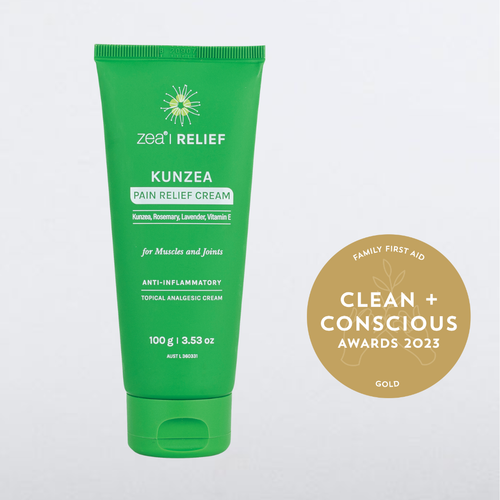
Kunzea Pain Relief Cream (AUST L 360 331) is a TGA-listed topical analgesic formulated to help relieve muscular aches, soreness, strains and mild joint pain. It is our best-selling product, with three natural active ingredients: Tasmanian Kunzea, Rosemary and Lavender, enriched with Vitamin E, cocoa and shea butters.
Kunzea ambigua is a Tasmanian native, wild-harvested by hand in the north-east of the state, and it is listed by the TGA as a therapeutic substance for the symptomatic relief of muscular aches and pains. Its terpene profile is rich in alpha-pinene, 1,8-cineole, globulol and viridiflorol, the compounds that give it its characteristic fresh scent and its traditional use for aches and stiffness.
How to use it for tennis elbow: massage a generous amount into the outside of the elbow and along the top of the forearm, not just the tender point. The forearm extensor muscles are usually just as tight as the tendon is sore. The cream absorbs well without leaving a residue, so it works before a work shift as well as before bed. Many people find twice-daily application, morning and night, is the useful rhythm.
MAGZEA Muscle Recovery Spray, for After Loading Sessions

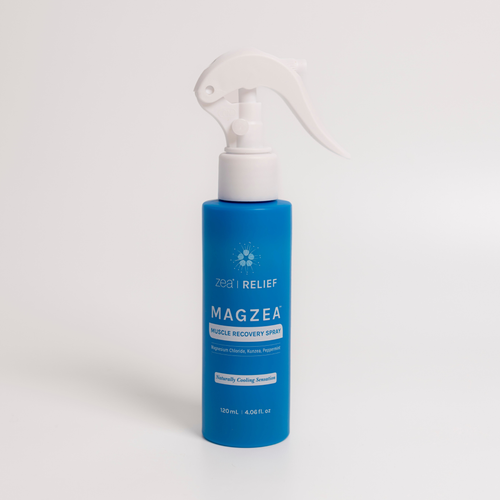
MAGZEA Muscle Recovery Spray combines Kunzea with magnesium, spearmint and peppermint in a fast-drying, non-greasy spray. The peppermint and spearmint create a genuine cooling sensation on the skin, which is what makes it useful straight after a rehab session or a heavy day of gripping.
It has two practical advantages for an elbow specifically. It is a spray, so you can apply it one-handed to your own forearm without gripping a tube, which is exactly the movement that hurts. And it dries fast, so it goes straight back under a work shirt or a brace.
A note on honesty: the evidence for magnesium absorbing meaningfully through intact skin is limited and contested, and we would rather say so than pretend otherwise. What MAGZEA reliably delivers is a cooling, refreshing topical application that helps sore forearms feel better after work, which is a real benefit worth having during a long rehabilitation.
How to use it: 4 to 6 sprays over the forearm and elbow after your loading session or at the end of a physical work day, massaged in lightly.
Used together, the pattern most people settle into is the spray for immediate cooling relief after activity, and the cream for sustained morning and evening application.
The Rest of the Range That Helps Here
The cream and the spray do most of the work, but three others earn their place in a tennis elbow routine.
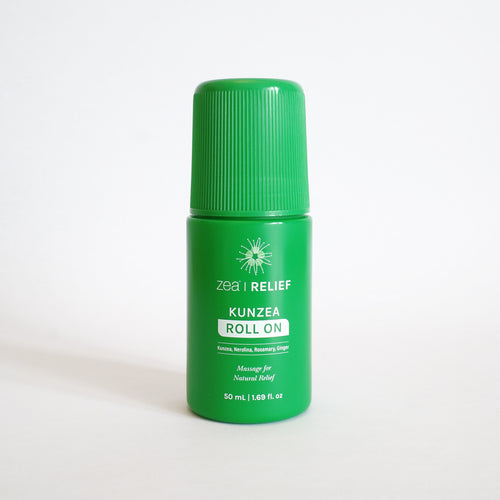
- Kunzea Roll On. The most practical format for this particular injury. You can run it along your own forearm one-handed without gripping or squeezing anything, and it targets the tender point precisely. Small enough for a work bag or a kit bag.
- Premium Rectangle Heat Pack. Warm it before a loading session to loosen a stiff forearm, or freeze it and use it cold afterwards. The rectangle size wraps a forearm comfortably.
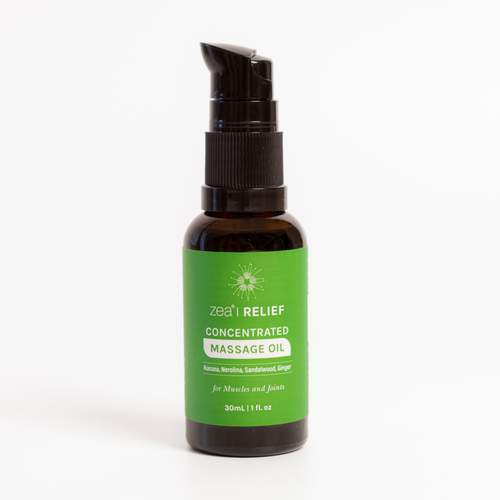
- Kunzea Concentrated Massage Oil. Better slip than a cream for working along the extensor muscles, which is what the evening step in the routine above is for. Useful if someone else is doing the massaging.
A quick word on what not to do: none of these replace the loading programme. They make the months of rehabilitation more comfortable so you actually stick with the exercise, which is the part that fixes the tendon.
Frequently Asked Questions
Should I rest my elbow completely?
No. Complete rest allows the tendon and forearm muscles to weaken further and does not speed up healing. Reduce the specific activities that aggravate it, keep the arm moving through comfortable ranges, and begin loading exercises as soon as you can tolerate them.
Is tennis elbow inflammation?
Not in the way most people assume. Tissue studies of chronic tennis elbow show degenerative change in the tendon with a striking absence of inflammatory cells. There can be inflammation in the surrounding tissue, particularly early on, but the core problem is a tendon that has failed to heal properly. This is why anti-inflammatory approaches alone rarely resolve it.
Should I use heat or ice?
Both, at different times. Warmth before activity or exercise helps a stiff forearm move. Cold after a loading session or a heavy work day helps settle soreness. Neither fixes the tendon, but both help you stay consistent with the loading that does.
Can I keep working or playing sport?
Usually yes, with modification. Reduce grip force, use a counterforce strap during aggravating tasks, take regular breaks, and check your technique or equipment. For racquet sports, a slightly larger grip size and lower string tension both reduce load through the extensor tendons.
Will a cortisone injection fix it?
It will very likely reduce your pain for a few weeks. The Australian trial data shows that at one year, people who had a corticosteroid injection had lower recovery rates and more than four times the recurrence rate of people who had a placebo injection. Discuss it with your GP, and understand the trade-off before you proceed.
How do I know if it is getting better?
Track function rather than pain alone. Can you hold the kettle a little longer, shake hands without wincing, carry the shopping in one trip? Grip endurance and morning stiffness usually improve before the pain fully disappears. Progress in tendinopathy is measured in weeks and months, not days.
Can I use Kunzea Pain Relief Cream every day?
Yes. It is formulated for regular topical use and is suitable for the whole family. Apply to clean, unbroken skin and wash your hands afterwards. As with any topical product, do a small patch test first if you have sensitive skin, and speak to your healthcare professional if you are pregnant or breastfeeding.
The Short Version
Tennis elbow is a tendon that has failed to heal, not an inflammation that needs quietening. Most people recover within a year, but the route matters. Progressive loading exercise has the strongest evidence and is the only thing that addresses the underlying problem. Relative rest, a counterforce strap, ergonomic changes and topical relief all support that work. Corticosteroid injections buy short-term comfort at the cost of worse outcomes a year later.
Be patient with it, be consistent with the loading, and give yourself the comfort you need to stay the course. If you are still struggling after 6 to 12 weeks of self-management, see a physiotherapist or your GP for an individual assessment.
For sustained daily relief through the process, Kunzea Pain Relief Cream (AUST L 360 331) is our most popular choice, and MAGZEA Muscle Recovery Spray is the one to keep in the work bag for after a heavy day. You may also find our guides on telling muscle, nerve and joint pain apart and managing plantar fasciitis, another stubborn tendon condition, useful reading.

References
Sources open in a new tab so you do not lose your place.
- 1. healthdirect Australia. Tennis elbow: symptoms, causes and treatment. View source
- 2. Kraushaar BS, Nirschl RP. Tendinosis of the elbow (tennis elbow): clinical features and findings of histological, immunohistochemical and electron microscopy studies. View source
- 3. Bisset L, Beller E, Jull G, Brooks P, Darnell R, Vicenzino B. Mobilisation with movement and exercise, corticosteroid injection, or wait and see for tennis elbow: randomised trial. BMJ, 2006. View source
- 4. Tyler TF, Thomas GC, Nicholas SJ, McHugh MP. Addition of isolated wrist extensor eccentric exercise to standard treatment for chronic lateral epicondylosis. Journal of Shoulder and Elbow Surgery, 2010. View source
- 5. Green S, Buchbinder R, Barnsley L, et al. Non-steroidal anti-inflammatory drugs (NSAIDs) for treating lateral elbow pain in adults. Cochrane Database of Systematic Reviews. View source
- 6. Coombes BK, Bisset L, Brooks P, Khan A, Vicenzino B. Effect of corticosteroid injection, physiotherapy, or both on clinical outcomes in patients with unilateral lateral epicondylalgia: a randomized controlled trial. JAMA, 2013. View source
- 7. Shahabi S, Bagheri Lankarani K, Heydari ST, et al. The effects of counterforce brace on pain in subjects with lateral elbow tendinopathy: a systematic review and meta-analysis. Prosthetics and Orthotics International, 2020. View source
This article is general information only and is not a substitute for individual medical advice. Always read the label and follow the directions for use. If symptoms persist, talk to your health professional.
![Premium Rectangle Heat Pack [Dual Action] - Natural Australian Lupin](http://www.zeaaustralia.jp/cdn/shop/files/Neutral_Images_1080_x_1080_3_5e6efda8-faf2-4afb-9a77-0bf791125c88.png?v=1776732090&width=500)