
Pain isn’t one-size-fits-all. Muscle pain, nerve pain, and joint pain may feel similar at times, but they have very different causes, and understanding the difference can help you manage discomfort more effectively.
Many people describe pain simply as “aches” or “soreness,” yet the type of pain you’re experiencing can influence what helps (and what doesn’t), especially at night when discomfort often feels worse. In this guide, we break down the key differences between muscle pain, nerve pain, and joint pain, how each typically feels, and practical ways to support your body.
Why Understanding Pain Type Matters
Treating pain without knowing its source can lead to frustration. What helps muscle tension may do very little for nerve pain, and joint pain often needs a different approach altogether.
Knowing the type of pain you’re experiencing can help you:
-
Choose the right support strategies
-
Avoid over-treating or under-treating symptoms
-
Improve sleep comfort and recovery
-
Better understand when to seek professional advice
Muscle Pain (Myofascial Pain)
What is muscle pain?
Muscle pain occurs when muscle fibres become tight, strained, inflamed, or fatigued. It’s one of the most common forms of pain and is often linked to physical activity, posture, stress, or overuse.
How muscle pain usually feels
-
Achy, sore, or tender
-
Tight or knotted
-
Cramp-like
-
Worse with movement or pressure
-
Often improves with warmth or gentle massage
Muscle pain can be localised (for example, in the neck or calves) or widespread, especially after intense exercise or prolonged stress.
Common causes of muscle pain
-
Overuse or repetitive movements
-
Poor posture or prolonged sitting
-
Stress and muscle tension
-
Exercise-related strain
-
Dehydration or electrolyte imbalance
What can help support muscle pain
-
Gentle stretching and movement
-
Heat therapy to relax tight muscles
-
Massage or topical applications
-
Adequate hydration
-
Relaxation techniques before bed
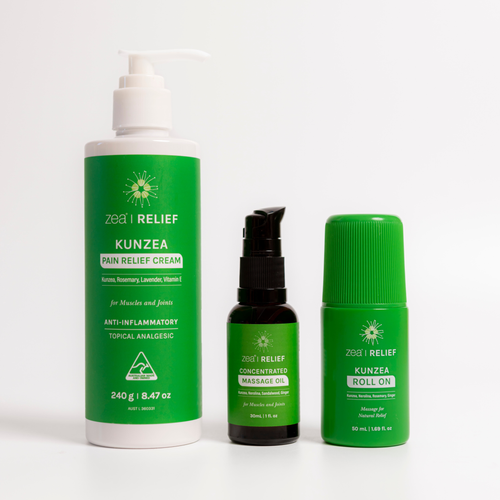
Topical products such as Kunzea Pain Relief Cream are often well suited for muscle discomfort, as they allow targeted application to tense areas without affecting the rest of the body.
Nerve Pain (Neuropathic Pain)
What is nerve pain?
Nerve pain occurs when a nerve is irritated, compressed, or damaged. Unlike muscle or joint pain, nerve pain originates from the nervous system itself and often behaves differently.
How nerve pain usually feels
-
Sharp, shooting, or stabbing
-
Burning or electric
-
Tingling or “pins and needles”
-
Numbness
-
Pain that radiates along a pathway (e.g. down the arm or leg)
Nerve pain often worsens at night when external distractions are reduced, making it feel more intense during rest.
Common causes of nerve pain
-
Sciatica or nerve compression
-
Herniated discs
-
Carpal tunnel syndrome
-
Diabetes-related neuropathy
-
Injury or inflammation affecting nerves
What can help support nerve pain
-
Reducing pressure on affected nerves
-
Gentle positioning and posture support
-
Targeted relaxation of surrounding muscles
-
Consistent sleep routines
While nerve pain can be more complex to manage, calming the surrounding tissues and nervous system by applying the Concentrated Massage Oil may help reduce discomfort, particularly before sleep
Joint Pain (Articular Pain)
What is joint pain?
Joint pain occurs where two bones meet and is often linked to inflammation, stiffness, or wear and tear of cartilage and connective tissues.
How joint pain usually feels
-
Deep, aching discomfort
-
Stiffness, especially in the morning
-
Swelling or tenderness around a joint
-
Reduced range of motion
-
Pain that worsens with weight-bearing or movement
Joint pain is common in areas such as the knees, hips, shoulders, and hands.
Common causes of joint pain
-
Arthritis (osteoarthritis or inflammatory arthritis)
-
Previous injury
-
Age-related joint degeneration
-
Repetitive strain
-
Inflammation
What can help support joint pain
-
Gentle movement to maintain mobility
-
Warmth to reduce stiffness
-
Low-impact activity
-
Supportive sleep positions
-
Topical products applied around (not directly into) the joint area
Supporting joints often involves a combination of movement, comfort, and consistency rather than a single solution.
Pain, Sleep, and the Nervous System
Pain of any type can disrupt sleep, and poor sleep can increase pain sensitivity. At night, reduced movement and fewer distractions may amplify discomfort, especially nerve and joint pain.
Supporting relaxation before bed, through gentle routines, comfortable sleep positions, and calming sensory input can help reduce the body’s stress response and make pain feel more manageable.
When to Seek Professional Advice
If pain is severe, persistent, worsening, or accompanied by symptoms such as numbness, weakness, or loss of function, it’s important to seek medical advice. Understanding pain type is a helpful first step, but ongoing pain should always be assessed by a qualified health professional.
Summary
-
Muscle pain, nerve pain, and joint pain feel different and respond to different strategies
-
Muscle pain is often tight or sore and responds well to warmth and relaxation
-
Nerve pain is sharp or burning and may worsen at night
-
Joint pain is deep and stiff, especially after rest
-
Supporting targeted comfort can make a meaningful difference
Understanding what type of pain you’re experiencing helps you choose more effective, body-friendly ways to support recovery and rest.
References
-
Cleveland Clinic. (2024, October 1). Myalgia (muscle pain). https://my.clevelandclinic.org/health/symptoms/myalgia-muscle-pain
-
Cleveland Clinic. (2023, November 10). Joint pain. https://my.clevelandclinic.org/health/symptoms/17752-joint-pain
-
Healthdirect Australia. (2024, August). Nerve pain (neuralgia). https://www.healthdirect.gov.au/nerve-pain
-
Votrubec, M., & Thong, I. (2013). Neuropathic pain: A management update. Australian Family Physician, 42(3). The Royal Australian College of General Practitioners. https://www.racgp.org.au/afp/2013/march/neuropathic-pain-update





![Kunzea Pain Relief Cream [Value Pack]](http://www.zeaaustralia.jp/cdn/shop/files/Neutral_Images_Website_1080_x_1080_12_aeeb7fb5-6b18-4315-99ea-c7a97403e37a.png?v=1776732033&width=500)


